Hermès Blind Stamps: A Collector’s Guide

For many of us who are collectors of Hermès, the resale market is often the only realistic way to buy certain Hermès bags. Maybe you’re after a specific leather or color that boutiques no longer carry. Maybe you’re dreaming of a Birkin or Kelly but don’t want to spend years building purchase history and playing the Hermès game. Whatever the reason, the resale market offers something boutiques often can’t: access to the exact bag you want, when you want it.
Of course, buying pre-loved Hermès comes with its own set of challenges.
One thing I’ve noticed over the years is just how sophisticated counterfeit bags have become. The days of obviously fake stitching and misspelled logos are largely behind us. Some modern superfakes are convincing enough to make even seasoned collectors stop and take a second look, which is exactly why the smallest details matter so much.
And this is exactly where this ultimate guide to the Hermès blind stamps comes in.
No, a blind stamp won’t tell you whether a bag is authentic on its own. But it can certainly help confirm whether a production year makes sense for a particular bag, whether the details line up with the era it supposedly comes from, and whether there are any inconsistencies worth investigating further. Think of it less as an authentication tool and more as one piece of a much bigger puzzle.
As someone who has been collecting luxury handbags since 2008, I’ve learned that understanding these small details can save you from making very expensive mistakes. That’s exactly why I put together this collector’s guide to Hermès blind stamps — to help you better understand your bag, date it correctly, and feel a little more confident when shopping on the resale market.
Anatomy of the Hermès Blind Stamp
So before we even get to start looking for the blind stamp, we need to know what are we looking for, or how does the Hermès blind stamp look like?
Well, first things first: the blind stamps consists of two different pieces of information: the Date Stamp and the Craftsman stamp. The first one is defined by alphabetical character and a surrounding shape (or just an alphabetical character), whereas the other one records the individual craftsman (or group of craftsmen) that manufactured the item and is defined by an individual or multiple stamps in a variety of shapes, symbols, letters, and numbers. Yep, I know it sounds confusing but hang on!
Where to find the Blind Stamp inside the Birkin or a Kelly?
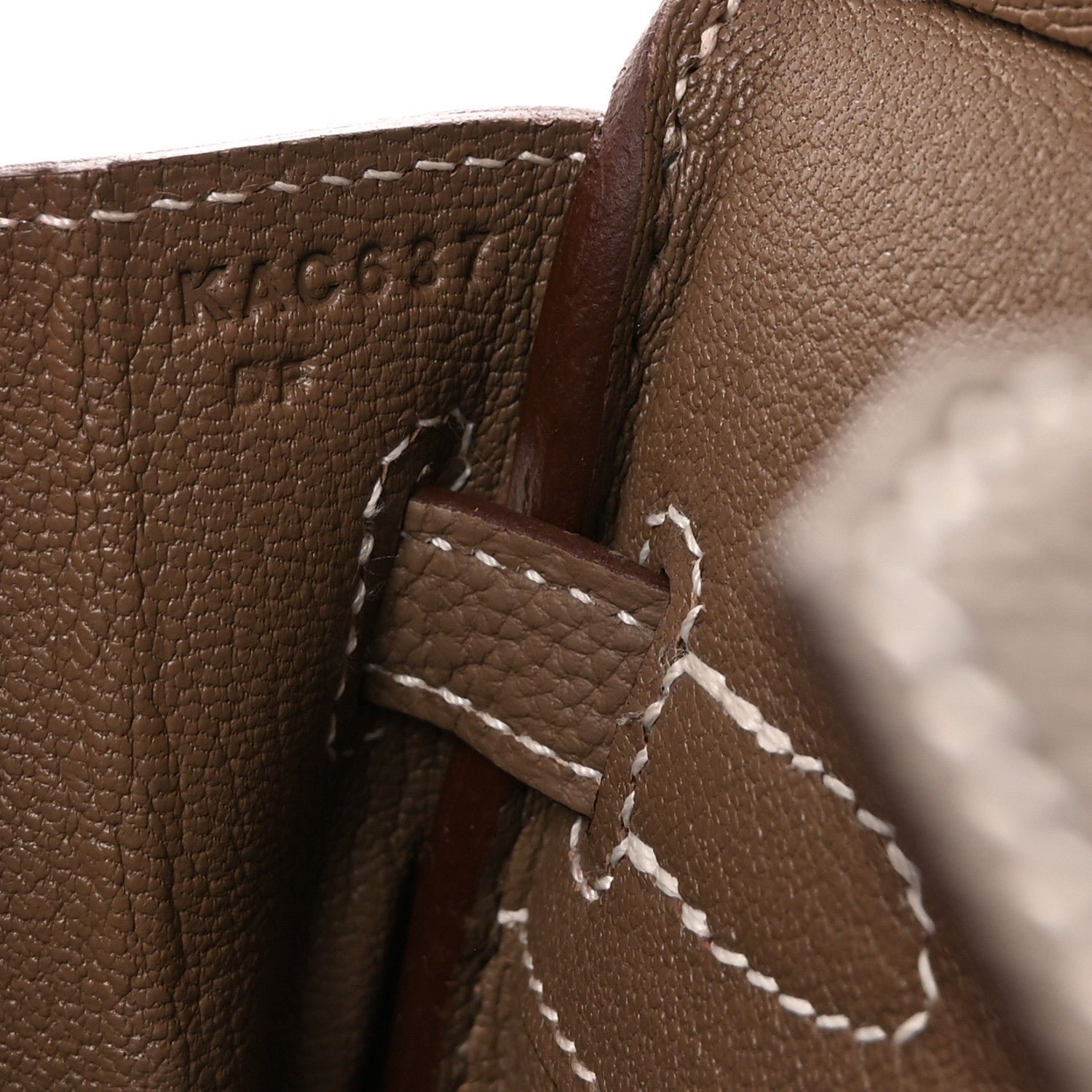
As you may have already guessed, the blind stamp gets its name from the fact that it is hidden from a naked eye. Basically, unlike serial numbers or logos that are meant to be immediately visible, Hermès blind stamps are discreetly heat-stamped into the leather and intentionally placed in areas that require a closer look. In other words, if you can instantly spot it without opening or inspecting the bag properly, something is probably off.
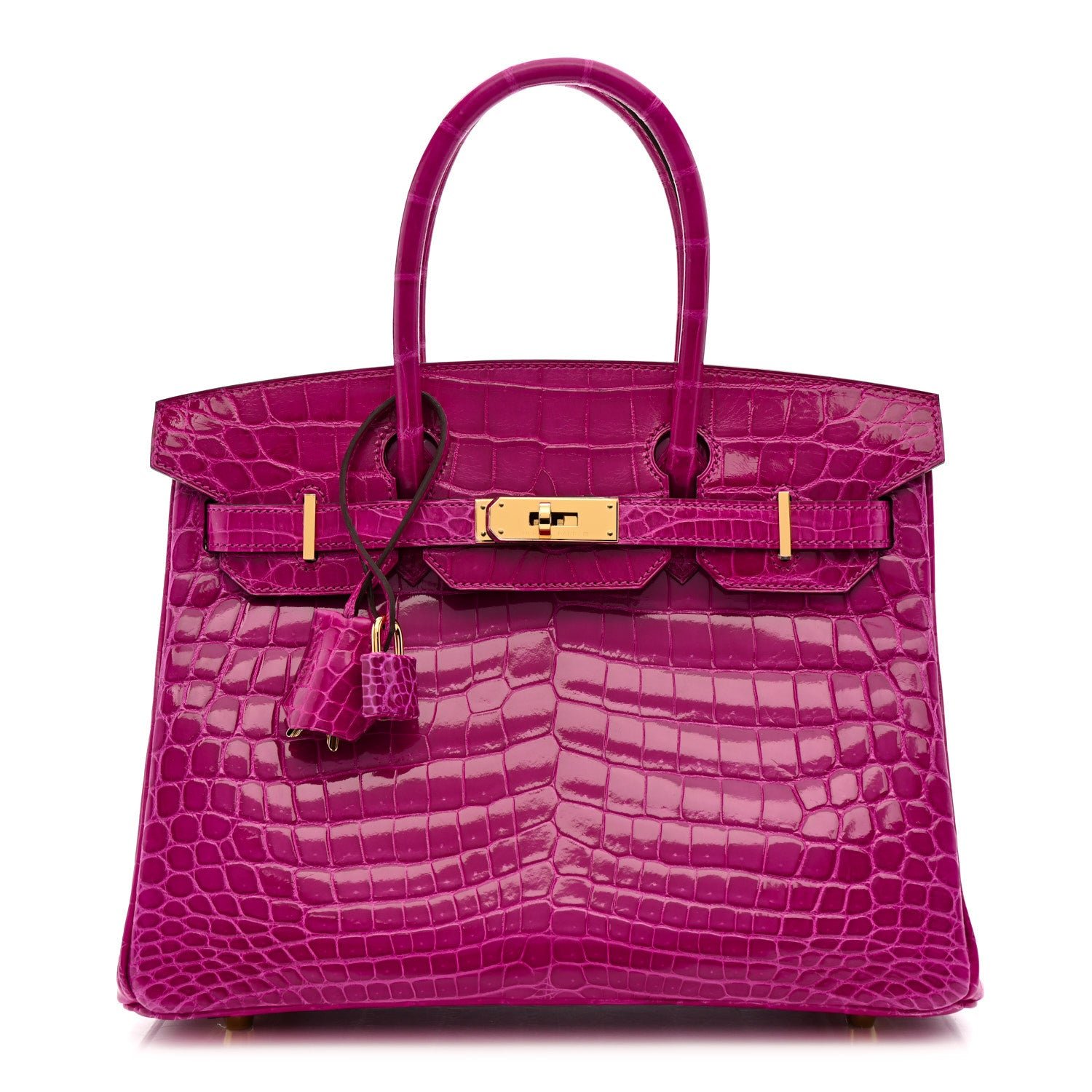
The location of the blind stamp will vary across the different bag models. But as a rule of thumb, on a Birkin, that would be hidden on the interior side of the bag near where the sangles (the front straps) connect to the body, while on the Kelly, the blind stamp will be found underneath the front flap on the upper interior panel of the bag.
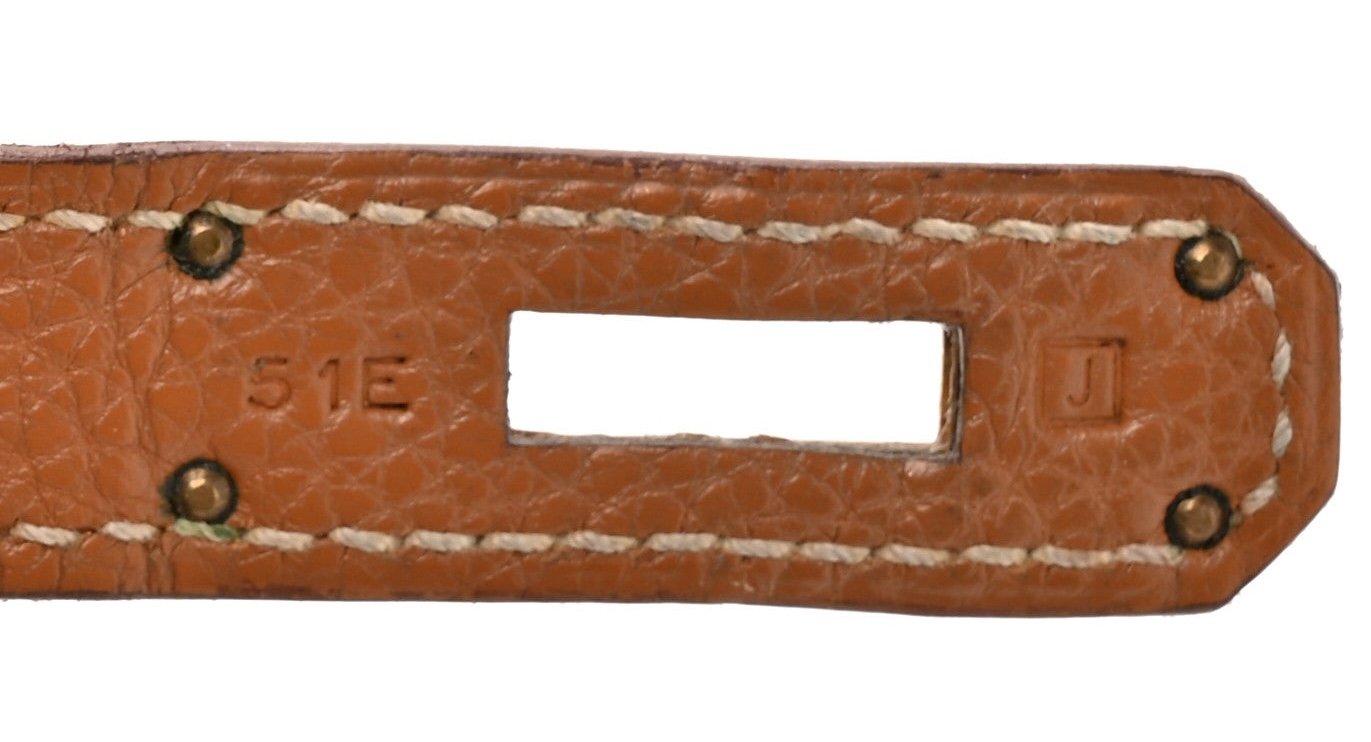
It’s worth noting though that older Birkin and Kelly bags (pre-2016 in particular) often had the stamp hidden under the outer strap instead of inside the bag, which is why you’ll sometimes hear collectors mention “strap stamps.”
How to read the Blind Stamp?
So now that we’ve learned the anatomy of the Hermès blind stamp and where to find it, it’s time to get to the most exciting part: actually learning how to read them.
Hermès collectors generally divide blind stamps into five main eras, each with its own format and way of identifying the year of production. Once you understand these systems, spotting the replica bag becomes so much more easier!
Era 1: 1922 to 1944 — No Blind Stamps
During the earliest years of Hermès leather goods production, bags did not include date stamps at all. This means truly vintage Hermès pieces from this era won’t have a blind stamp, as the dating system had not yet been introduced.
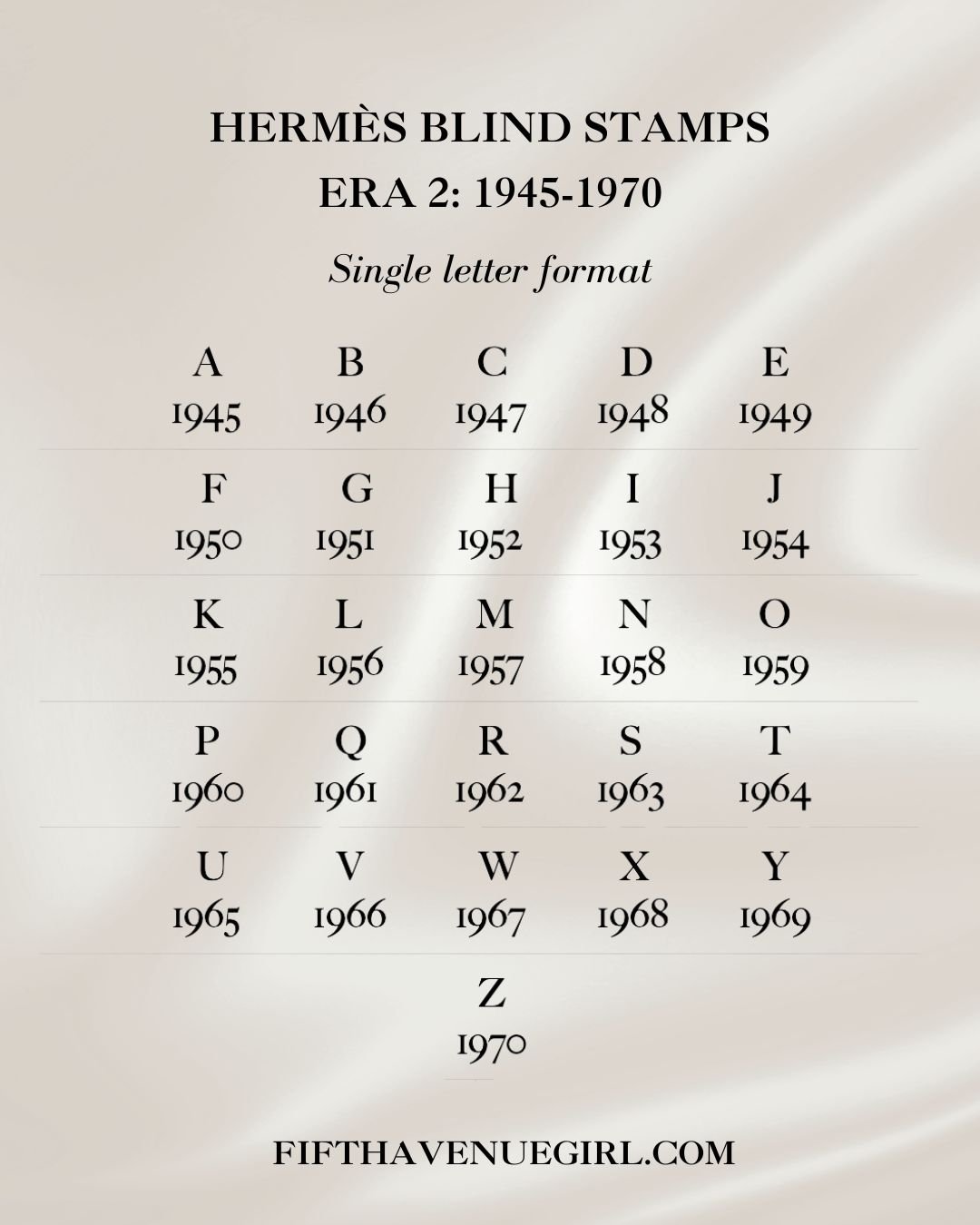
Era 2: 1945 to 1970 — Single Letter Stamps
Starting in 1945, Hermès introduced its first official date coding system. Bags from this period feature a single alphabetical letter stamped directly into the leather, with each letter corresponding to a production year. There were no surrounding shapes during this era — just the letter itself.
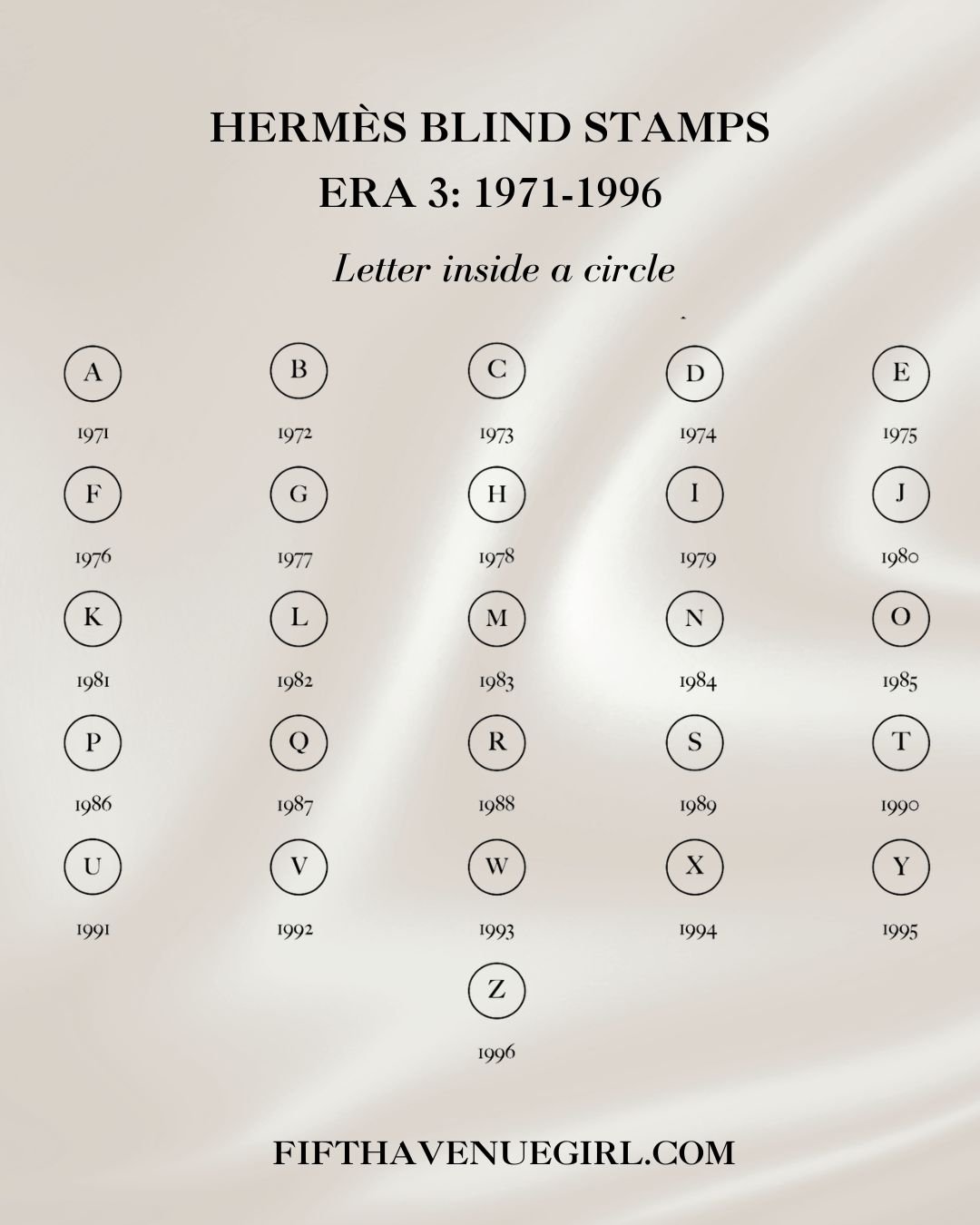
Era 3: 1971 to 1996 — Letter Inside a Circle
Beginning in 1971, Hermès updated the system by placing the yearly letter inside a circle. This is one of the easiest eras to recognize visually because the circular outline is immediately noticeable once you locate the stamp. Hermès collectors often refer to these simply as “circle stamps.”
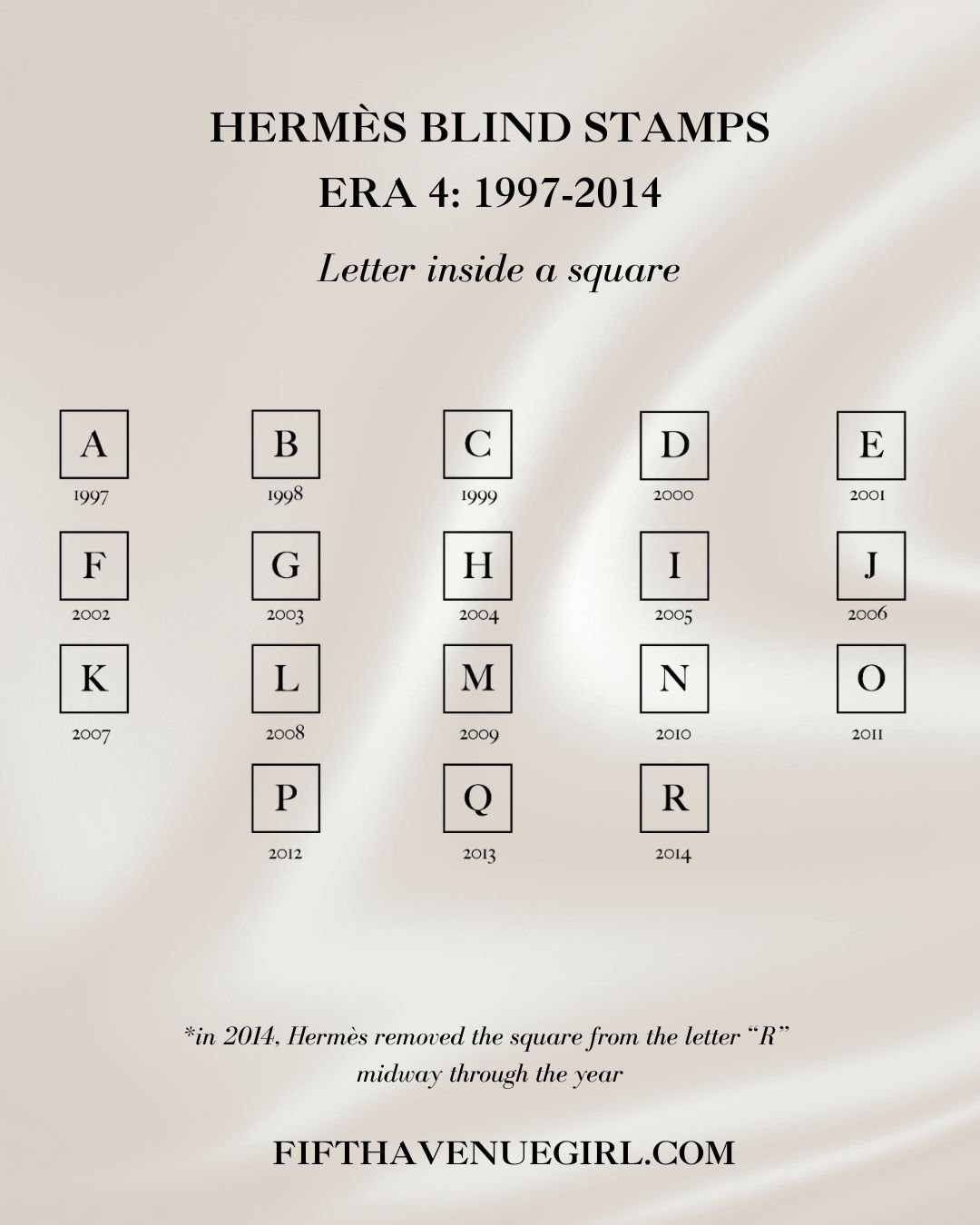
Era 4: 1997 to 2014 — Letter Inside a Square
In 1997, the system was changed once again, replacing the circle with a square around the date letter. These “square stamps” remained in use until 2014 and are among the most commonly seen blind stamps on today’s resale-market Birkins and Kellys. However, there is one interesting exception Hermès collectors often talk about: 2011. While authentic 2011 bags should feature the letter “O” inside a square, some genuine Hermès bags from that year feature an interlinked square “O” date stamp combined with a “J” craftsman mark. H-collectors refer to this as the “JO stamp anomaly.”
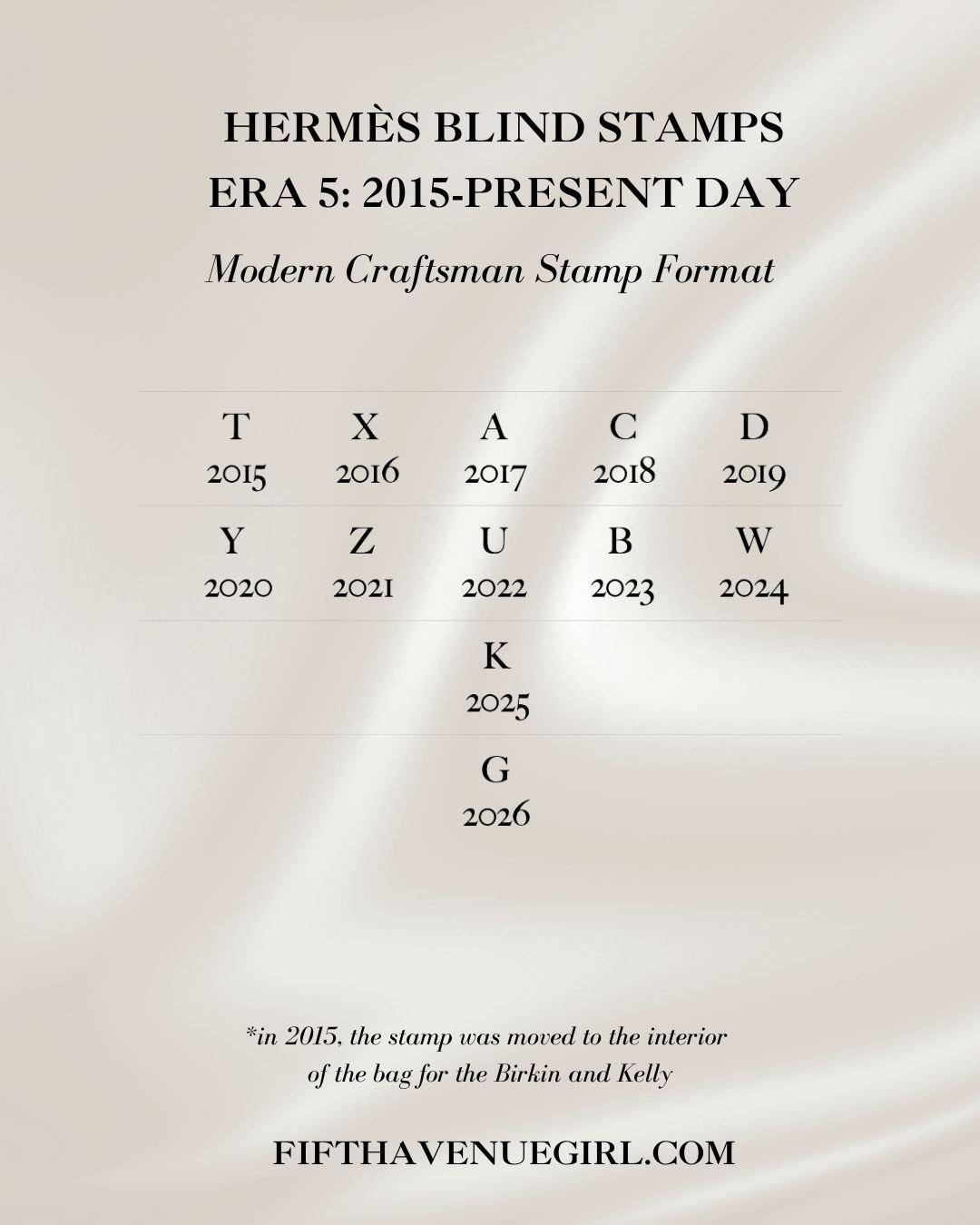
Era 5: 2015 to Present — Modern Craftsman Stamp Format
And finally, the most recent change to the Hermès blind stamp system took place in 2015. Now, instead of a single letter inside a shape, modern bags now feature a more complex “L LL NNN LL” format that includes both the date stamp and artisan identifiers. Particularly, the first letter indicates the production year, while the following letters and numbers represent the Craftsman Stamps. The latest stamp for 2026 features letter “G”.
Blind Stamps On Exotic Hermès Bags
Are you looking to buy a pre-loved exotic Hermès bag? If yes, you should know that in addition to the regular blind stamp hidden inside (or occasionally outside) the bag, Hermès also places a special symbol next to the front Hermès logo stamp to indicate the type of exotic skin used.
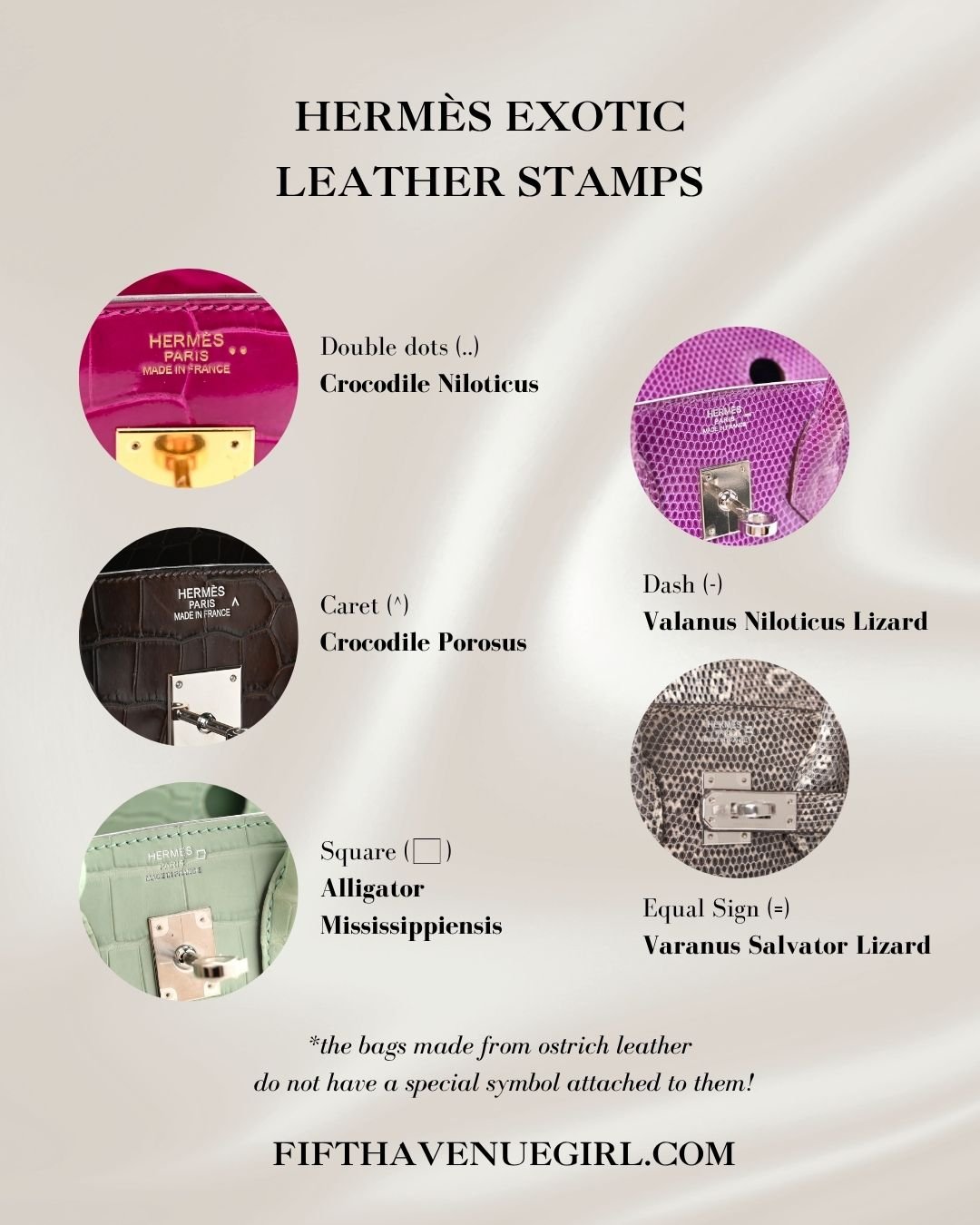
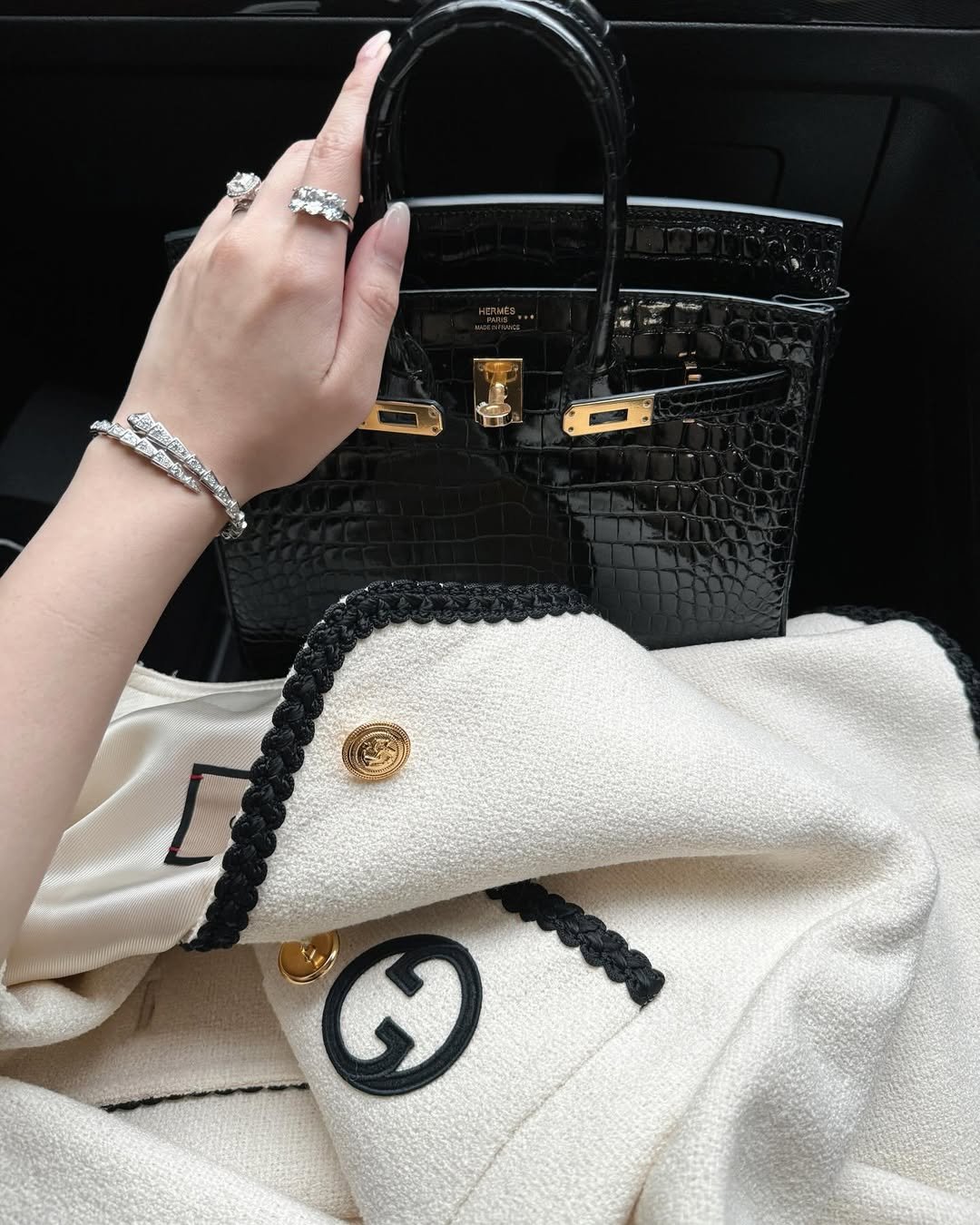
For bags crafted from Niloticus crocodile, you’ll see two small dots (..) next to the Hermès logo. Bags made from the even more luxurious Porosus crocodile feature a caret symbol (^), which collectors often associate with the rarest and most valuable exotic Hermès pieces. Lizard bags follow a slightly different system: a dash (-) indicates Varanus Niloticus lizard, while an equal sign (=) signifies Varanus Salvator lizard skin.
Please, note that bags made from Ostrich leather do not have a special symbol attached to them.
Other Hermès Stamps Worth Knowing
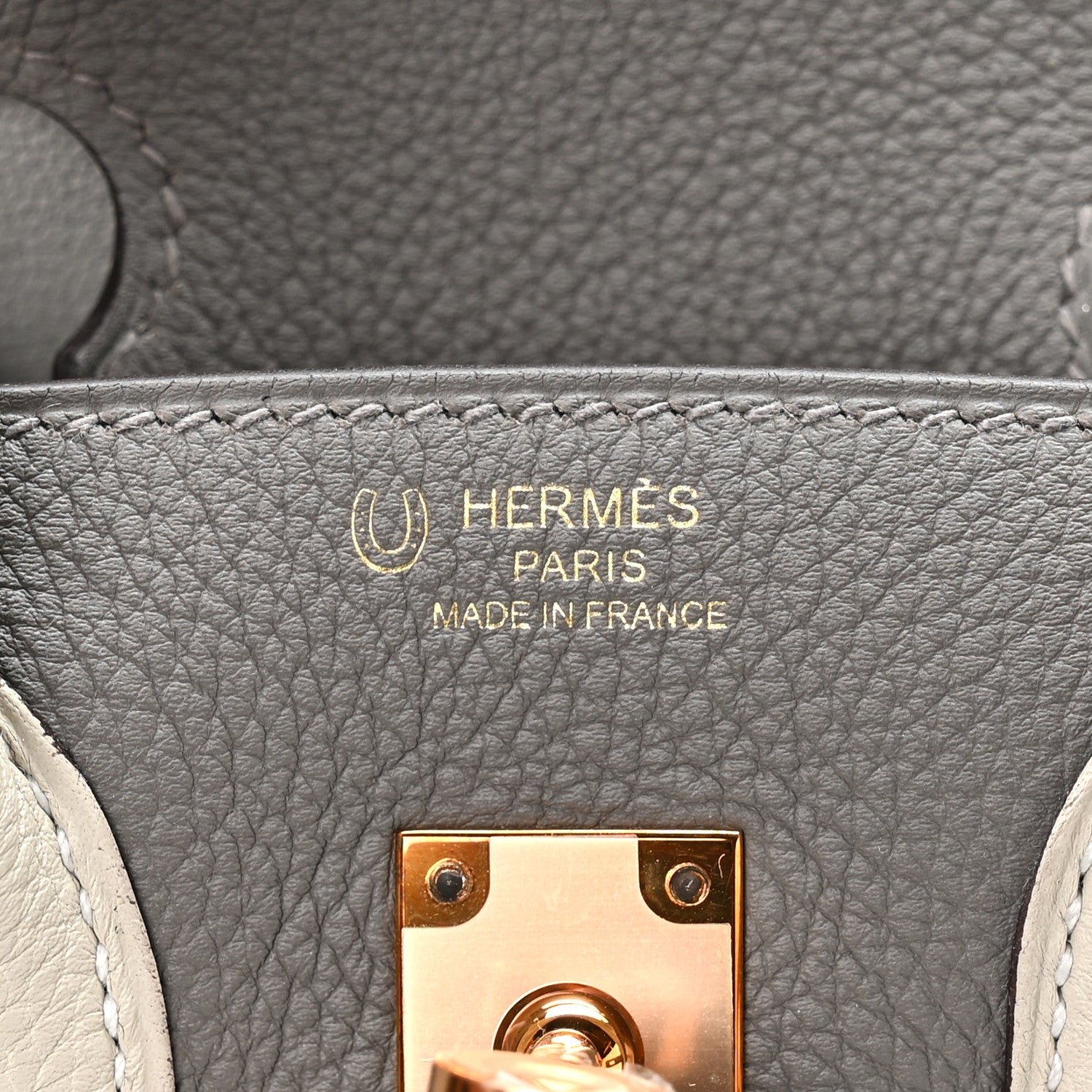
And last, but definitely not least, let’s talk about a few other symbols and stamps you may come across on Hermès handbags. The most common of them—the horseshoe, which indicates a special order Hermès bag, often referred to by collectors as an “HSS” (Horseshoe Stamp Special). If to try to explain the special order in short, these bags were custom ordered by selected by the brand Hermès clients and typically feature personalized color combinations, contrast stitching, or unique interior and exterior pairings that aren’t available through the standard collection. Find out how you can to get a special order bag from Hermès here.
Then there’s also the shooting star stamp (☆) — one of the rarest and most fascinating Hermès markings which identifies bags that were created for the personal use of a Hermès artisan. And as you can already guess, these bags are quite rare (since they were never intended for sale), which makes them incredibly valuable among collectors.
Hermès Blind Stamp FAQs
Not necessarily. Very early Hermès bags produced before 1945 did not include date stamps at all. In addition, blind stamps can occasionally become faint over time due to wear, spa treatments, or the characteristics of certain leathers. However, modern Hermès bags should always have a blind stamp somewhere on the bag, so the absence of one on a recent piece should be treated as a potential red flag.
Most Hermès leather goods produced after 1945 feature blind stamps, including popular models such as the Birkin, Kelly, Constance, Evelyne, Lindy, Picotin, and Garden Party. The exact location of the stamp varies depending on the model and production year.
No. A blind stamp is only one piece of the authentication puzzle. While it can help confirm production year and identify inconsistencies, authenticating a Hermès bag should always involve examining leather quality, stitching, hardware, logo stamping, proportions, and overall craftsmanship.
Hermès intentionally places blind stamps in discreet locations, which is where the name comes from. Depending on the model and year of production, the stamp may be hidden under the front flap, near the sangles, beneath a strap, or inside the bag. On older bags, the stamp can also become difficult to see due to wear or previous spa treatments.
For 2026, Hermès uses the letter G as the production year identifier within the current blind stamp system. Hermès updates the year letter annually, while the surrounding craftsman identifiers continue to vary from bag to bag.
The horseshoe stamp identifies a Hermès Special Order bag, often referred to by collectors as an HSS bag. These bags are custom-made for selected clients and frequently feature unique leather, hardware, and color combinations that are not available in the regular collection.
P.S. Feel free to leave any of your questions in the comments — I’ll do my best to answer them as quickly as I can.
xoxo’s, Masha