Are Luxury Brands Still Cheaper in Europe in 2026?

The vacation season is here and if there’s any question that I am being asked more than anything else around this time of the year is: are luxury brands still cheaper in Europe? The thing is that back in the day you could save thousands of dollars by simply purchasing an item abroad. But is this still true in 2026?
I think we can all agree that the luxury shopping landscape has changed significantly over the past few years. Particularly, thanks to numerous luxury price hikes and price harmonization efforts of certain brands (I am looking at you, Chanel), it’s no longer as advantageous for American luxury enthusiasts to shop abroad as it once was. But the good news is that the options for savings still exist in 2026. Keep scrolling to discover all the details!
Why are luxury brands typically cheaper in Europe?
Even if you don’t travel a lot, you’ve probably heard stories from people who managed to save significant amounts of money by shopping designer brands in Europe. Hey, actually, one of my Chinese friends keeps joking that Europe is like a big designer discount mall. How is that even possible?
Well, the short answer is: VAT refunds and cheaper prices.
European countries let foreign (non-EU) travelers claim a so-called VAT-refund on eligible purchases. VAT translates as “value added tax”. VAT charge in Europe fluctuates anywhere between 7 and 25 percent (countries are free to decide on the exact percentage) and it is already included in the market price of an item, unlike in the U.S., where the sales tax is an extra amount charged at checkout.
Additionally, companies are often able to price their goods cheaper when selling them in their home market (which Europe is for many luxe brands) due to low transportation costs and no expenses related to import/export. Though, I personally, wouldn’t put much hope on this in 2026, as a lot of brands have recently started to harmonize prices around the world (probably the biggest voice for this is Chanel, that openly announced the plans to harmonize prices for their products worldwide back in 2015). What this essentially means is that prices are going to become the same across the regions and we as consumers will be incentivized to shop in our home market more.
Thus, the most common way for how foreign shoppers are currently saving money by shopping in Europe is VAT refunds. But how do you apply for one?

VAT Refund Process in Europe, Explained
Well, to receive the VAT refund you must meet certain requirements. Particularly, you must be: at least 16 years old to apply. Then, if your purchase meets the minimum purchase requirements (€100.01 per transaction in France), you can request a VAT refund form when paying for the item at the cashier.
Pro tip: fill up the VAT form before you go to the airport – this will save you a significant amount of time at the airport’s customs office, which is where you will have to present the completed refund form and purchased items for inspection.
The custom’s officer will verify the form details and products before stamping for approval. Then you will be able to proceed to the VAT refund counter to collect the refund in cash or as a credit on your card, depending on the provider. Note that administrative fees may apply, reducing the total amount of your refund.
FIY: American shoppers should expect to pay US duty charges when returning back to the US. And while those aren’t anything major, they can definitely offset some of the savings obtained by shopping abroad.
Real-life Shopping Example
Now that we’ve learned why luxury brands are typically cheaper in Europe and how one can apply for a VAT refund, it’s time for some math!
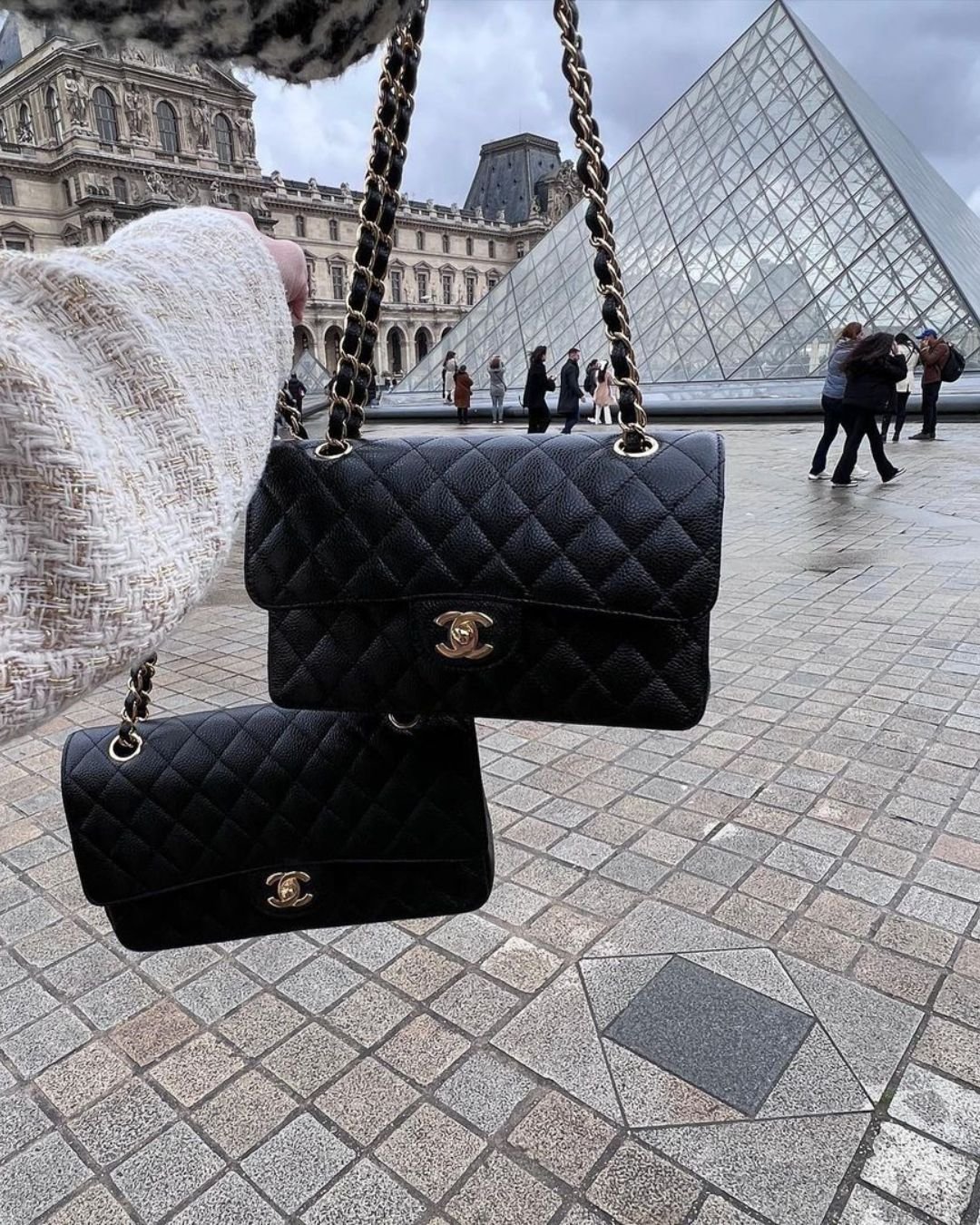
Let’s say we are looking to purchase the Chanel Classic Flap in the size “small”, which currently retails for $11,300 plus tax in the States (yes, there was another Chanel price increase just recently in April)! Sure, we could simply go ahead and purchase it here, which will set us back $11,300 plus tax (for the sake of this example, let’s assume the approx. sales tax of 10 percent). So, the total that we are going to pay is going to be about $12,430 USD.

But why pay $12,430 now when we can wait until we go on a summer vacation to Paris, where the same bag can be ours for €10,100 with the potential of receiving 12 percent of the amount back (the current VAT refund rate in France)? See the full calculation below.
| Buying the Small Chanel Classic Flap in the US vs. Europe | |
| Price of the bag in the US | $11,300.00 |
| Price of the bag in Europe | €10,100 |
| Total cost of the bag in the US (approx. sales tax of 10 percent) | $11,300+$1,130 =$12,430 |
| Total cost of the bag in Europe (1EUR=1.14USD) | $11,488 |
| Potential VAT refund (12%) | $1,379 |
| US import duty | $901.92 |
| Total cost of the bag in Europe (incl. VAT refund and US import duty) | $11,011 |
| Total savings | $1,419 |
By taking a look at the numbers, the findings are clear: substantial savings can still be made by shopping for luxury in Europe!
Is Price Harmonization Eliminating the Benefits of Shopping Abroad?
Luxury brands are very well aware of the consumer practice to buy luxury abroad in order to benefit from lower prices. In fact, narrowing those regional price gaps has been an ongoing goal for many of those brands for years.
One of the most notable examples came in 2015, when Chanel announced its global price harmonization strategy in an effort to reduce the large price differences between Europe, United States and Asia. Since then, the brand has adjusted prices across different markets multiple times, including the record-breaking price increase in Europe in May 2020, when many of its classic bags rose by more than 20%.
And Chanel certainly isn’t the only brand moving in this direction. Louis Vuitton, Hermès, Dior and others have all made efforts to harmonize prices across the regions in recent years. The reason? To incentivize the consumers to shop in their local markets. I mean, who’s going to shop in the brand’s local boutiques if prices are going to be so much cheaper abroad? Right, no-one!
With that being said, for now, Europe remains one of the most attractive places in the world to buy luxury. Sure, the savings may not be as dramatic as they once were. But they are. indeed, still there. And if you will be going to Europe for a holiday anyway, why not use this chance to save some money on the things you love, right?
Shopping For Luxury in Europe: FAQs
France is generally the best place to buy French luxury brands such as Hermès, Chanel, Louis Vuitton, Dior, Celine, and Saint Laurent, while Italy is often the most affordable destination for Italian brands like Gucci, Prada, Bottega Veneta, and Fendi. Prices are usually consistent within the Eurozone, so your final savings often depend more on VAT refund rates and exchange rates than on the country itself.
Yes. Despite several rounds of global price harmonization and frequent price increases, Chanel handbags are generally still less expensive in Europe than in the United States and many other international markets.
Yes. Hermès handbags and leather goods are typically priced lower in Europe than in overseas markets, particularly in the United States. Eligible non-EU visitors may also qualify for a VAT refund, increasing the overall savings.
For decades, United Kingdom has been a beloved destination for luxury shopping. However, in September 2020, UK government has announced a plan to end VAT-free shopping for non-EU visitors. As a result, from January 1st 2021 foreign travelers are no longer able to reclaim the VAT in the UK.
Luxury brands have spent the past decade narrowing regional price differences through price harmonization. While the gap has become smaller, Europe still offers meaningful savings for many luxury purchases thanks to lower retail prices and VAT refunds. It is, however, very likely that at some point prices for luxury goods will be the same around the world as that’s what many luxury brands are moving towards.